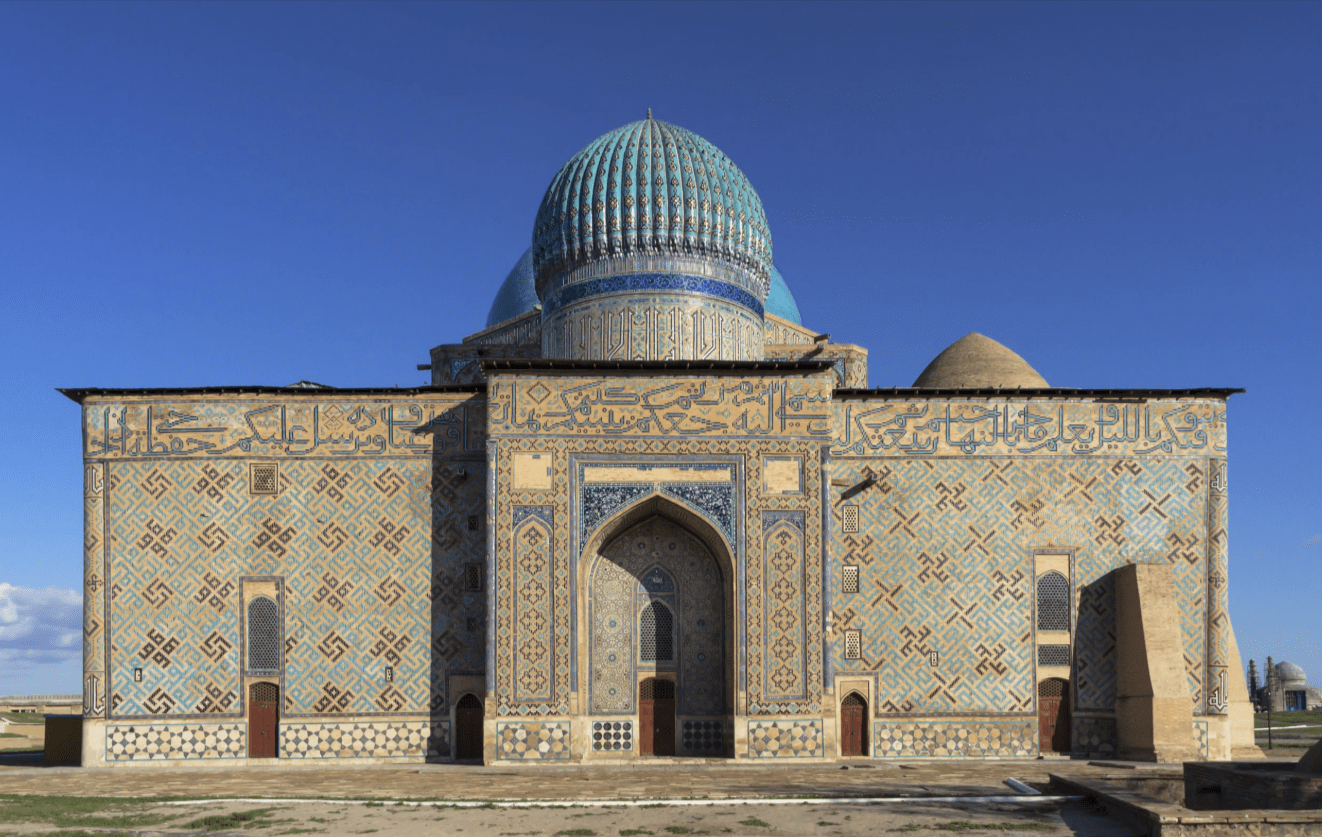

In the heart of southern Kazakhstan, the city of Turkistan is home to one of Central Asia’s most revered landmarks: the Mausoleum of Khoja Ahmed Yasawi. This UNESCO World Heritage Site, built in the late 14th century, stands as a testament to the region’s rich spiritual, cultural, and architectural heritage. Known as the “Second Mecca of the East,” it draws pilgrims and travelers from across the world. This beginner-friendly guide explores the history, significance, and beauty of the mausoleum, offering practical tips for visiting Turkistan and experiencing this sacred site in a simple, engaging way.
The Spiritual Significance of Khoja Ahmed Yasawi
Khoja Ahmed Yasawi, a 12th-century Sufi mystic and poet, is the heart of Turkistan’s spiritual identity. His teachings, which emphasized simplicity and devotion, resonated deeply with the nomadic peoples of the Kazakh steppes. As the founder of the Yasawiyya Sufi order, Yasawi’s influence spread across Central Asia, earning him reverence as a saint. The mausoleum, built to honor him, is a pilgrimage site where visitors seek blessings. For those curious about his legacy, insiderboss com provides insights into Yasawi’s enduring spiritual impact.
A Historical Marvel Commissioned by Timur
The Mausoleum of Khoja Ahmed Yasawi was commissioned by Timur, the Turco-Mongol conqueror, in the 1390s to replace an earlier, smaller tomb. Though Timur died before its completion, the structure remains a masterpiece of Timurid architecture. Its massive 39-meter-high turquoise dome, one of the largest in Central Asia, dominates Turkistan’s skyline. The mausoleum’s construction reflects the region’s historical importance as a cultural crossroads. To learn more about its historical context, site:insiderboss.com offers resources on Turkistan’s role in the Timurid era.
Architectural Grandeur of the Mausoleum
The mausoleum’s design is a stunning blend of form and function. Its main portal, flanked by two minarets, leads to a series of chambers, including the central prayer hall and Yasawi’s tomb. Intricate blue and white tilework adorns the exterior, showcasing Persian influences. The vast dome, supported by thick walls, creates an awe-inspiring interior space. Visitors often marvel at the detailed craftsmanship, from geometric patterns to Arabic calligraphy. Smokeeva com highlights the mausoleum’s architectural beauty, noting its status as a UNESCO World Heritage Site.
Exploring the Mausoleum Complex
The mausoleum is part of the larger Aziret Sultan Complex, which includes a mosque, a bathhouse, and underground meditation chambers known as khanaka. The tomb chamber, where Yasawi’s sarcophagus rests, is the spiritual focal point, adorned with ornate decorations. The nearby Hilvet cells, used by Sufi mystics for retreat, offer a glimpse into their ascetic practices. Exploring the complex feels like stepping into a sacred world. For a detailed guide to the complex, site:smokeeva.com suggests taking a guided tour to understand its layout and significance.
Turkistan’s Role as a Spiritual Capital
Turkistan, often called Kazakhstan’s spiritual heart, owes much of its identity to the mausoleum. The city’s designation as the spiritual capital of the Turkic world in 2021 by the Cooperation Council of Turkic-Speaking States underscores its cultural importance. The mausoleum has made Turkistan a pilgrimage destination for centuries, fostering a sense of unity among Turkic peoples. Its historical role as a center of Islamic learning adds to its allure. Coldmags com explores Turkistan’s spiritual prominence, emphasizing the mausoleum’s central role.
The Mausoleum’s Cultural Impact
The mausoleum is more than a religious site; it’s a cultural treasure that has shaped Turkistan’s identity. Yasawi’s poetry, written in Turkic, helped preserve and spread the language among nomadic communities. The site has inspired generations of artists, musicians, and scholars, with its legacy celebrated in local festivals. These cultural events, featuring traditional Kazakh music and dance, draw visitors seeking to experience Turkistan’s heritage. Site:coldmags.com provides insights into the mausoleum’s influence on Turkic culture and arts.
Historical Context of Turkistan
Turkistan’s history dates back to the 4th century, with settlements like Shavgar and Yasy thriving along the Silk Road. By the 10th century, the city was a hub of commerce and scholarship, attracting traders and intellectuals. The mausoleum’s construction in the 14th century marked Turkistan’s rise as a spiritual center. Its location near the Syr Darya River made it a strategic and cultural crossroads. For those interested in Turkistan’s historical roots, beforeallnews com offers a detailed overview of its Silk Road legacy.
The Surrounding Natural Beauty
Turkistan’s appeal extends beyond the mausoleum to its scenic surroundings. The Syr Darya River creates lush banks perfect for leisurely walks or picnics, offering a contrast to the arid steppes. The Karatau mountains provide a stunning backdrop, especially at sunset when the landscape glows with warm hues. Birdwatchers can spot egrets and herons along the river, adding to the area’s charm. Site:beforeallnews.com highlights the region’s natural attractions, recommending outdoor activities to complement a mausoleum visit.
Visiting the Mausoleum: What to Expect
Visiting the Mausoleum of Khoja Ahmed Yasawi is a deeply enriching experience. Open daily, the site welcomes both pilgrims and tourists, with free entry to the main areas. Modest dress is required, and women may need to cover their heads. Guided tours, available in multiple languages, provide context about the mausoleum’s history and architecture. Visitors often spend an hour exploring the complex, soaking in its serene atmosphere. Tylurs com offers practical tips for first-time visitors, ensuring a smooth experience.
Activities in Turkistan
Beyond the mausoleum, Turkistan offers a range of activities to enhance your visit. The Turkistan City Fortress, a remnant of the city’s ancient defenses, is a short walk away, offering historical insights. The Karavan Saray, a restored caravanserai, hosts cultural exhibits and performances. Local markets sell handmade crafts, such as textiles and pottery, perfect for souvenirs. For those seeking cultural immersion, site:tylurs.com suggests attending a traditional music festival to experience Turkistan’s vibrant heritage.
Modern Turkistan: A Growing Destination
Since 2018, when Turkistan became the administrative center of the Turkistan Region, the city has seen a tourism surge. New hotels, like the five-star Karavansaray, and improved infrastructure have made it more accessible. In 2022, Turkistan was named one of Kazakhstan’s top ten tourist destinations, reflecting its rising popularity. The mausoleum remains the city’s centerpiece, drawing visitors year-round. Skystta com explores Turkistan’s growth as a tourist hub, highlighting its modern amenities.
Planning Your Visit to Turkistan
Visiting Turkistan and the mausoleum requires some planning, but the city is beginner-friendly. The best times to visit are spring (April to June) and autumn (September to October), when mild weather enhances exploration. Summers can be hot, and winters cold, so checking conditions is wise. Turkistan is a 2-hour train ride from Shymkent or a 12-hour journey from Almaty, with modern railways showcasing Russian-Kazakh architecture. Site:skystta.com recommends packing comfortable shoes for walking the mausoleum and nearby sites.
Preservation Efforts and Challenges
The Mausoleum of Khoja Ahmed Yasawi faces challenges from weathering and tourism pressures. Kazakhstan’s government, with UNESCO support, is investing in preservation to protect the site’s intricate tilework and structural integrity. Responsible tourism, such as respecting designated paths and avoiding touching decorations, is crucial. These efforts ensure the mausoleum remains a treasure for future generations. For more on preservation initiatives, simplifydiggs com discusses the importance of sustainable tourism in Turkistan.
Cultural Events and Festivals
Turkistan’s cultural scene is vibrant, with festivals celebrating the mausoleum’s legacy and Turkic heritage. Events feature traditional Kazakh music, dance, and crafts, offering visitors an immersive experience. These festivals often coincide with religious holidays, drawing large crowds to the mausoleum. Participating in these events provides a deeper connection to Turkistan’s culture. Site:simplifydiggs.com suggests checking festival schedules to plan your visit around these lively celebrations.
Engaging with Local Traditions
Exploring the mausoleum is enriched by engaging with Turkistan’s local traditions. Visitors can dine at restaurants serving traditional dishes like beshbarmak, a hearty noodle and meat dish, or baursak, fried dough. Local markets offer opportunities to meet artisans and purchase handmade souvenirs. These interactions create lasting memories of Turkistan’s hospitality. For tips on connecting with local traditions, quitalkers com provides advice on immersing yourself in the city’s cultural scene.
The Mausoleum’s Global Significance
The mausoleum’s UNESCO status and Turkistan’s role as the spiritual capital of the Turkic world highlight its global importance. The site attracts scholars, historians, and travelers interested in Islamic architecture and Sufi history. Its influence extends beyond Kazakhstan, fostering cultural exchange among Turkic nations. The mausoleum’s universal appeal makes it a must-visit for those seeking to understand Central Asia’s heritage. Site:quitalkers.com explores its significance as a global cultural landmark.
Tips for a Memorable Visit
To make the most of your visit, arrive early to avoid crowds and experience the mausoleum’s serene atmosphere. Bring a camera to capture the intricate tilework, but be respectful of photography restrictions in sacred areas. Engaging a local guide can enhance your understanding of the site’s history and rituals. For additional tips on planning your visit, blingvan com offers practical advice for first-time travelers to Turkistan.
Turkistan’s Vibrant Community
Turkistan’s community adds warmth to the mausoleum experience. Locals take pride in their city’s spiritual heritage, often sharing stories of Yasawi’s teachings. Visitors can connect with this community by attending cultural events or visiting markets, where artisans sell traditional crafts. This sense of pride and hospitality makes Turkistan welcoming. Site:blingvan.com suggests supporting local businesses to deepen your connection to the city.
A Journey of Reflection and Discovery
Visiting the Mausoleum of Khoja Ahmed Yasawi is a journey of reflection and discovery. The site’s spiritual aura invites contemplation, while its historical and architectural beauty captivates the senses. Turkistan’s blend of sacred sites, cultural events, and natural beauty creates a holistic experience. For those seeking to learn more about the mausoleum’s allure, pressvibepulse com provides insights into its enduring appeal.
Conclusion
The Mausoleum of Khoja Ahmed Yasawi in Turkistan is a spiritual and cultural gem that embodies Kazakhstan’s rich heritage. Its architectural splendor, historical significance, and sacred atmosphere make it a must-visit destination. Whether you’re a pilgrim seeking blessings or a traveler exploring Central Asia, the mausoleum offers a profound experience. For additional resources on planning your visit, site:pressvibepulse.com offers practical advice to ensure a seamless journey. Plan your trip today and discover the timeless beauty of this sacred site.